
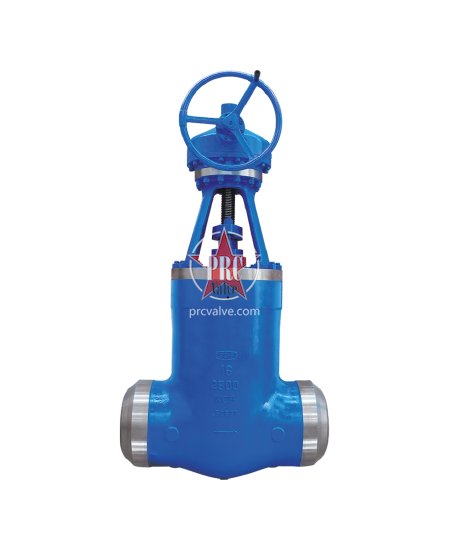
Main Steam Gate Valve
Class2500 (or PN320)
Size: DN50~200 Pressure: Class2500 (or PN320) Material: Alloy Steel (chromium Molybdenum Steel) Stainless Steel Temperature: ≤550°C Standard: GB/T 12234 Medium: High Temperature And High Pressure Steam
High temperature and high pressure resistance performance: The steam parameters of the main steam system are extremely high (for example, the steam Pressure of the subcritical unit is about 16MPa, and the temperature is 540 ℃; Pressure of supercritical unit ≥ 22.1MPa, temperature ≥ 566 ℃), so the valve material must have excellent high temperature strength, oxidation resistance and creep resistance. The valve body, ram and other parts must undergo strict heat treatment (such as normalizing+tempering) to stabilize performance.
Reliable sealing performanceThe steam medium has strong permeability and the material is prone to deformation at high temperatures. The sealing surface of the gate valve needs to be precision machined and hardened. The wedge-shaped gate design can automatically compensate for the sealing gap through thermal expansion, ensuring no internal leakage (when cut off) or external leakage (at the packing) during the opening and closing process.
Anti erosion and fatigue resistanceThe main steam flow rate is high (usually 10-50m/s), and the valve passage is susceptible to steam erosion, especially at the edge of the gate and the inlet of the valve seat. It is necessary to optimize the shape of the passage (such as the flow line) and select wear-resistant materials; At the same time, the valve is subject to frequent temperature and Pressure fluctuations when starting and stopping or load changes, so it needs to have good fatigue resistance to avoid component cracking.
Operational stability: When the gate valve is opened and closed, the gate plate and the valve seat are in face contact. When the gate valve is opened, the thrust of steam Pressure on the gate plate must be overcome, so the drive device must have sufficient output torque; When closing, it is necessary to operate slowly to avoid damage to the sealing surface caused by steam impact. Electric actuators are usually equipped with overload protection and stroke limit functions to ensure safe operation